

Most travelers come to Awaji Island for its coastline, fresh seafood, and quiet countryside. But the island also offers something unexpected: architecture that is deeply connected to nature. Buildings rise from forests, gardens, and the shoreline not to dominate the landscape, but to blend into it.
That is what makes Awaji Island so special. Instead of competing for attention, its architecture invites visitors to slow down and notice light, water, and space in a new way. Sunlight on concrete. Reflections on still water. A sea breeze moves through open courtyards. Here, design becomes part of the natural experience.
The island’s architectural identity has been shaped by some of Japan’s most respected architects, particularly the world-renowned architects Tadao Ando and Shigeru Ban. Their styles are different, but both share the same idea: architecture should create meaning, not just visual impact.
And one more reason why Awaji Island is so easy to visit: it is only about one hour from Osaka and around 30 minutes from Kobe. That makes it an ideal day trip or short escape for anyone interested in design, nature, and calm surroundings.
In this guide, we’ll look at how these architects bring their ideas to life across the island.
Table of Contents
Why the Architecture on Awaji Island is Different
Many destinations are known for their famous buildings. Awaji Island is different because the landscape itself becomes part of every architectural experience.
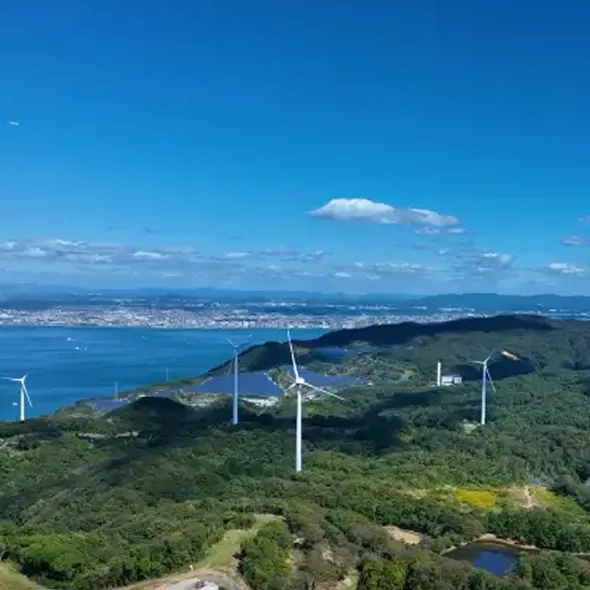
Surrounded by the calm waters of the Seto Inland Sea, the island offers dramatic coastlines, rolling hills, dense forests, flower fields, and changing seasonal scenery. Rather than creating structures that stand apart from nature, many architects have treated the environment as part of the design. That is especially true in the structures designed by Tadao Ando.
This close relationship between architecture and nature is one of the defining features of Awaji Island architecture. Visitors are not simply looking at buildings—they are moving through spaces where light, wind, water, and landscape constantly reshape the experience.
Two Visionaries, Two Different Ways of Seeing Nature
Few places in Japan allow visitors to experience the work of multiple world-renowned architects within such a compact area. On Awaji Island, two masters of contemporary architecture offer completely different interpretations of how people should interact with the natural world.
Tadao Ando creates architecture through silence, geometry, and carefully controlled light. His buildings encourage reflection, asking visitors to slow down and become aware of every movement, every shadow, and every shift in atmosphere.

Shigeru Ban, whose work we’ll explore later in this guide, approaches architecture from another perspective. His designs emphasize sustainability, natural materials, and creating spaces that improve everyday life while remaining deeply connected to the environment.
Together, their work demonstrates that architecture isn’t defined by a single style. Instead, it’s a conversation between people and a place.
Tadao Ando: The Architect Who Built with Light
Long before becoming one of the world’s most celebrated architects, Tadao Ando followed an unconventional path. Largely self-taught, he spent his early years studying buildings through travel rather than formal architectural education. His curiosity eventually developed into a design philosophy that would earn him international recognition, including the 1995 Pritzker Architecture Prize, often regarded as architecture’s highest honor.
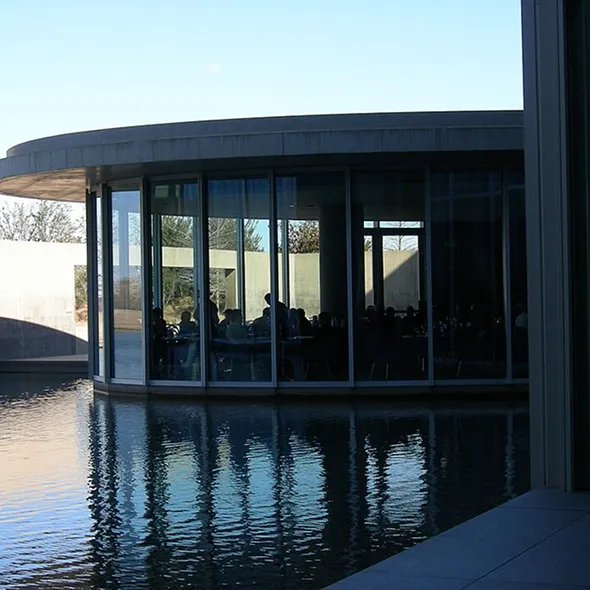
Today, Ando’s work can be found across Japan and around the world. Yet some of his most remarkable creations are found on Awaji Island, where dramatic landscapes perfectly complement his architectural vision.
Unlike architects who rely on ornament or elaborate decoration, Ando works with remarkably simple elements: smooth exposed concrete, carefully proportioned spaces, natural light, water, and silence. These materials may seem minimal, but together they create environments that feel unexpectedly emotional.
His buildings rarely reveal themselves all at once. Instead, visitors are gently guided through a sequence of spaces where anticipation gradually builds. A narrow passage opens into a bright courtyard. A staircase descends toward still water. A window frames a single view of the sea. Every movement is intentional, allowing architecture to unfold almost like a story.
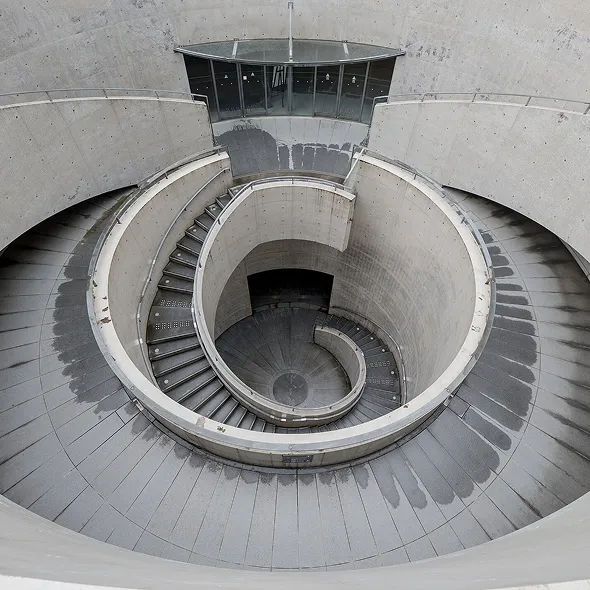
His work on the island shows how light, water, and concrete can create spaces that feel quiet, balanced, and deeply connected to the place. Tadao Ando’s architecture is known for this kind of restraint, where every line and opening space has a purpose.
Walk through a building in the early morning, and sunlight creates a different atmosphere than it does in the afternoon. Visit in spring, when flowers cover the hillsides, and the setting feels transformed again. Even changing weather becomes part of the experience, softening concrete with mist or reflecting bright skies across still water.
Rather than asking visitors to admire a building from the outside, Ando invites them to experience it from within.
The Design Principles Behind Tadao Ando’s Architecture
- Light Becomes the Building
For Tadao Ando, light is more than illumination—it’s a construction material.
Throughout his buildings, sunlight moves across concrete walls throughout the day, constantly changing the atmosphere of each space. Morning light feels gentle and inviting, while afternoon shadows introduce depth and quiet drama. Because of this, no two visits to Tadao Ando buildings are ever exactly the same.
Instead of filling interiors with decorative details, Ando allows natural light to become the focal point, encouraging visitors to notice subtle changes they might otherwise overlook.
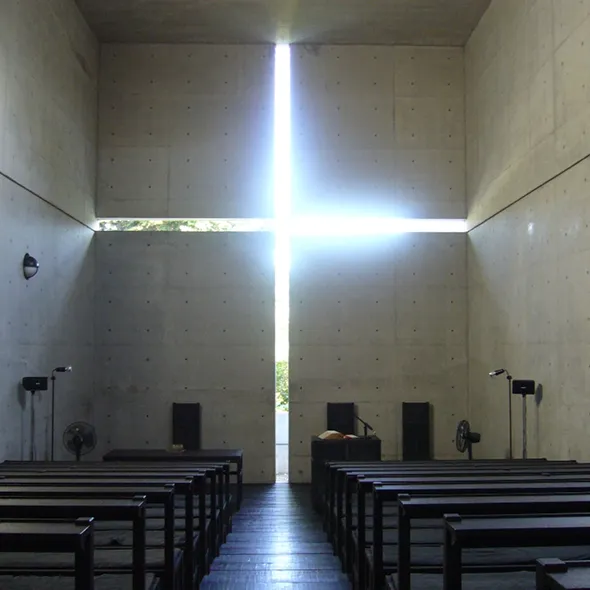
Church of the Light (Ibaraki, Osaka Prefecture)
- Finding Warmth in Concrete
At first glance, exposed concrete may appear cold or industrial. Yet in Ando’s hands, it feels remarkably calm and welcoming.
His smooth concrete surfaces reflect changing light, while carefully positioned openings reveal gardens, trees, and water beyond the walls. The contrast between solid architecture and living nature creates a sense of balance that has become one of his defining signatures.
On Awaji Island, this relationship is especially powerful. The island’s greenery, sea breezes, and changing seasons soften every geometric form, making even minimalist spaces feel deeply connected to the surrounding landscape.
- Architecture as a Journey
Perhaps the most distinctive aspect of Tadao Ando’s architecture is how it unfolds over time.
Rather than presenting a complete view immediately, his buildings encourage exploration. Visitors descend hidden staircases, follow gently curving paths, and move through sequences of light and shadow before arriving at the destination.
This gradual discovery transforms architecture into an experience rather than an object.
Instead of simply seeing a building, you become part of it.
Awaji Yumebutai: A Landscape Reimagined
Few places capture Tadao Ando’s philosophy more completely than Awaji Yumebutai.
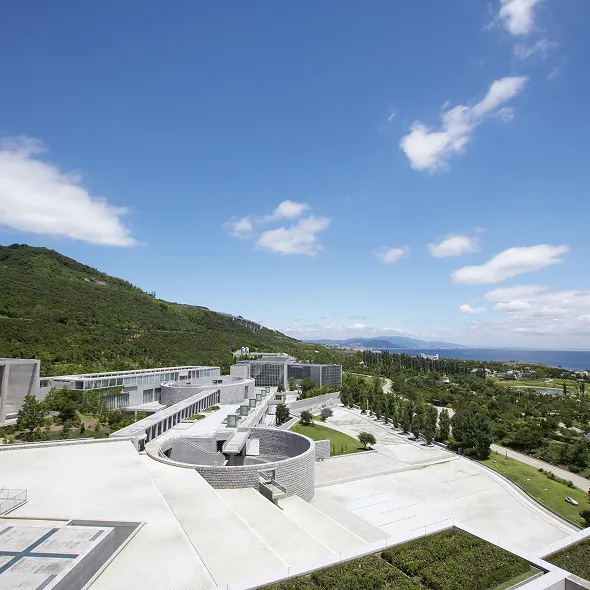
Located on the island’s northeastern coast, this vast architectural complex stands on land that once supplied the earth used to create the airport’s artificial island. Rather than hiding the site’s history, Ando transformed it into a symbol of environmental renewal, creating a destination where architecture and nature coexist in remarkable harmony.
One of its most iconic features is the Hyakudanen, or “100-Step Garden,” where one hundred flower-filled terraces cascade down the hillside in perfect geometric order. Throughout the seasons, these gardens bloom with changing colors, creating a striking contrast against Ando’s signature concrete architecture.
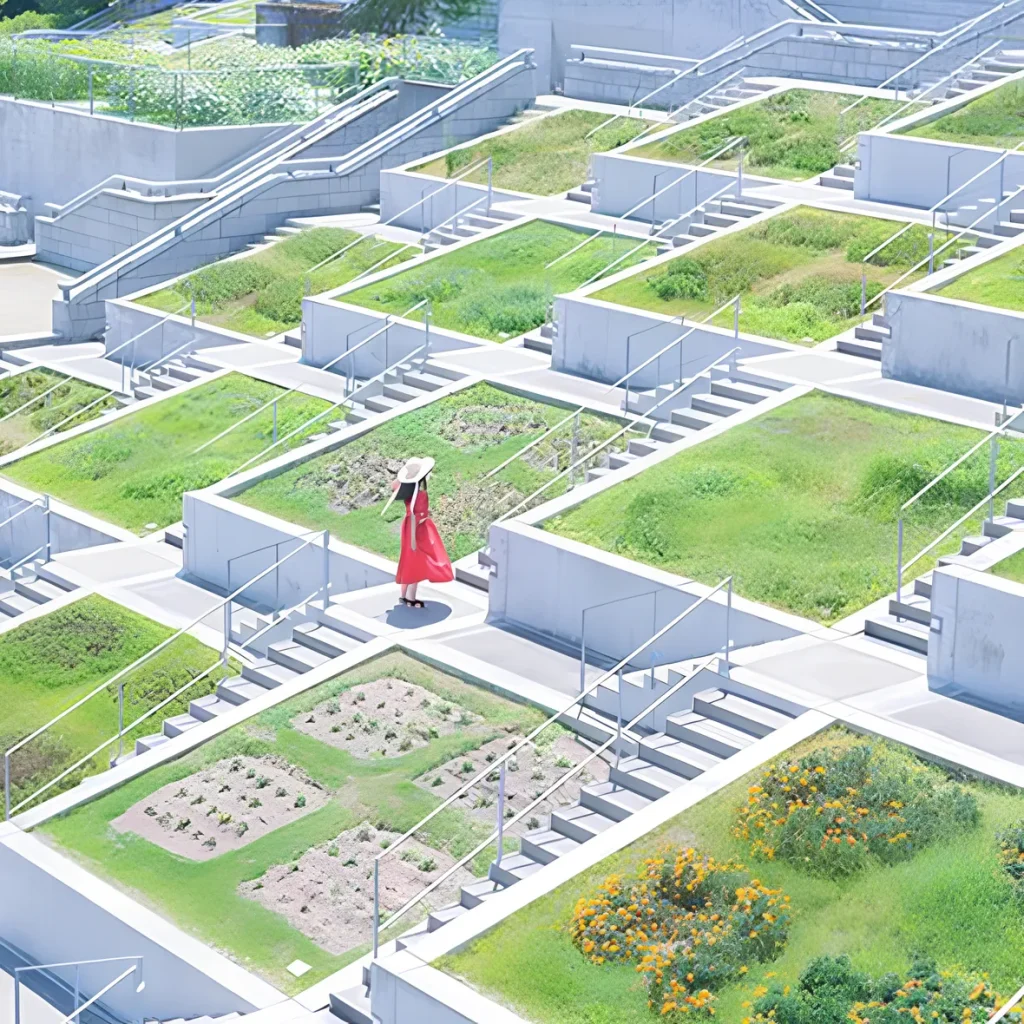
Yet the true beauty of Awaji Yumebutai lies in the journey itself. Visitors wander through interconnected terraces, open courtyards, reflecting pools, and panoramic viewpoints overlooking the Seto Inland Sea. Every turn reveals a carefully framed landscape, encouraging exploration at a leisurely pace.
Rather than feeling like a collection of buildings, the complex feels like an extension of the island itself.
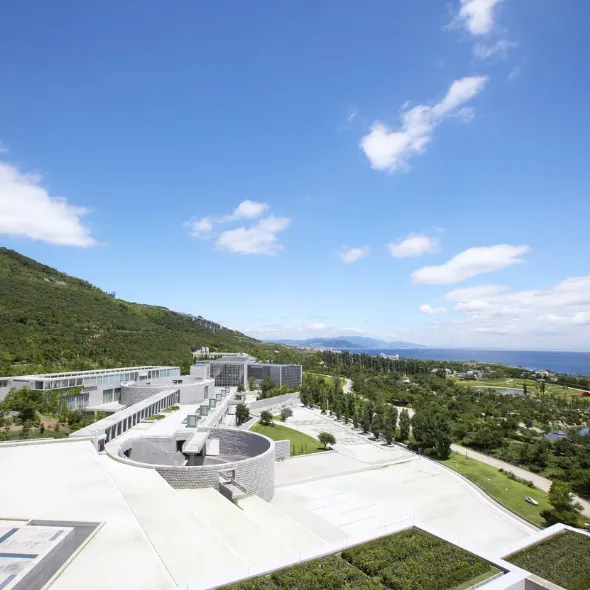
It’s a place where architecture doesn’t replace nature—it helps visitors appreciate it more deeply.
Honpukuji Water Temple: A Journey Beneath the Lotus Pond
If Awaji Yumebutai celebrates openness, Honpukuji Water Temple offers a completely different emotional experience.
From the outside, the temple appears almost invisible. Visitors first encounter a large oval lotus pond, peaceful and seemingly untouched. There is no grand entrance, no towering gate announcing what lies beyond.
Instead, a narrow staircase quietly descends through the center of the pond.
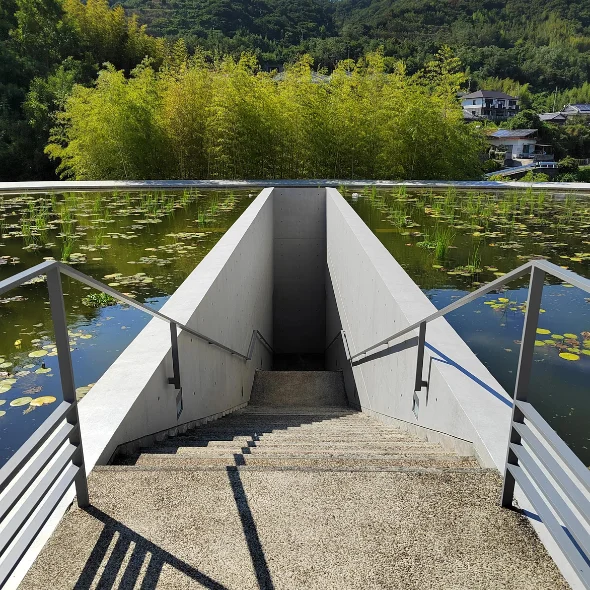
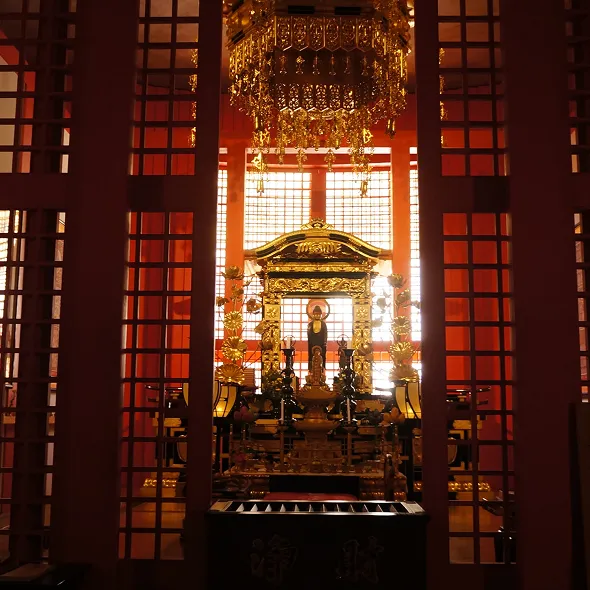
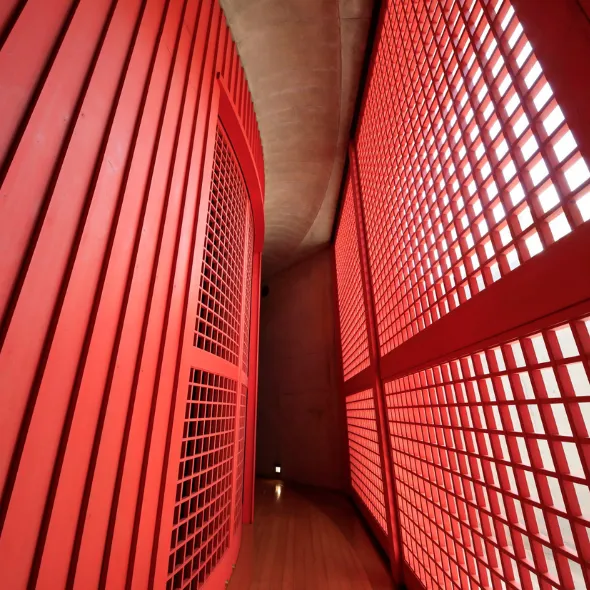
As daylight gradually fades, the atmosphere shifts. Cool concrete walls surround the path, creating a sense of stillness before visitors emerge into the temple’s striking crimson prayer hall below ground.
This carefully choreographed transition—from light to shadow, from openness to intimacy—is one of Tadao Ando’s most celebrated architectural sequences. Rather than separating architecture from spirituality, he uses movement itself to create a moment of reflection.
Even visitors with no religious background often describe the experience as profoundly moving.
It perfectly captures Ando’s belief that architecture should engage not only the eye but also the emotions.
Shigeru Ban: Architecture Rooted in People and Nature
So far, we’ve explored how Tadao Ando transforms concrete, light, and landscape into unforgettable experiences. But his vision is only one chapter in Awaji Island’s architectural story.
In the next part of this guide, we’ll explore how Shigeru Ban redefines architecture through sustainability, natural materials, and spaces that bring people closer to nature. From the award-winning Zenbo Seinei to Farmer’s Restaurant Haru San San, you’ll see a completely different yet equally inspiring side of the island’s design heritage.
Designing Spaces That Care for People
If Tadao Ando teaches us to experience silence through concrete and light, Shigeru Ban reminds us that architecture begins with people.
His buildings don’t seek attention through monumental forms or dramatic gestures. Instead, they invite people to feel comfortable, connected, and closer to the natural world. Wood carries its own warmth. Fresh air flows freely through open spaces. Every material has a purpose; every structure respects its surroundings.
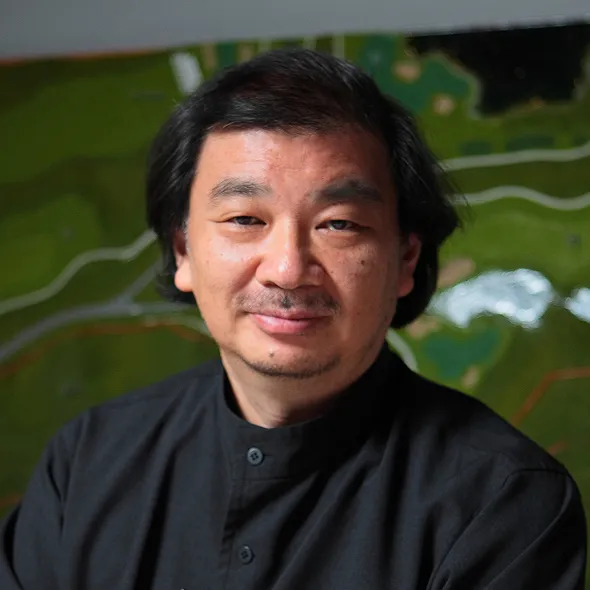
Awarded for the 2014 Pritzker Architecture Prize, Shigeru Ban is internationally recognized not only for beautiful architecture but also for his humanitarian work. Following earthquakes, conflicts, and natural disasters around the world, he has designed emergency shelters using recyclable paper tubes and locally available materials — proving that architecture can improve lives when people need it most. His commitment to social responsibility has become one of the defining aspects of his career.
On Awaji Island, Shigeru Ban’s philosophy takes on a different expression. Rather than responding to emergencies, his projects encourage visitors to reconnect with themselves, the landscape, and a slower rhythm of life. Across meditation spaces, restaurants, and architectural accommodations, he demonstrates that sustainability and beauty can exist in perfect harmony.
The Design Principles Behind Shigeru Ban’s Architecture
- Building with Responsibility
Throughout his career, Shigeru Ban has challenged conventional ideas about construction materials. While he is widely known for pioneering the architectural use of paper tubes, his work extends far beyond a single material.
For Shigeru Ban, sustainability isn’t about following trends—it’s about making thoughtful choices. He often works with renewable timber, recyclable materials, and efficient structural systems that reduce environmental impact without compromising beauty or durability. His projects show that innovative architecture can be both elegant and responsible.
- Nature Is Part of the Interior
Rather than separating buildings from their surroundings, Shigeru Ban blurs the boundary between inside and outside.
Large openings invite natural light deep into interior spaces. Timber structures frame views of forests and mountains. Breezes become part of the experience, while changing weather subtly transforms the atmosphere throughout the day.
On Awaji Island, this philosophy feels especially natural. The island’s forests, sea views, and open skies become living elements of the architecture itself.
- Simplicity That Feels Human
One of Ban’s greatest strengths is making extraordinary architecture feel approachable.
His buildings rarely overwhelm visitors. Instead, they create spaces where people naturally slow down: sharing a meal, practicing meditation, or simply enjoying the quiet beauty of the surrounding landscape.
This human-centered approach makes his work deeply memorable. Rather than showcasing architectural complexity, he focuses on creating places where people genuinely enjoy spending time.
Zenbo Seinei: Architecture for Mindfulness
Among Shigeru Ban’s most celebrated works on Awaji Island, Zenbo Seinei offers perhaps the purest expression of his architectural philosophy.
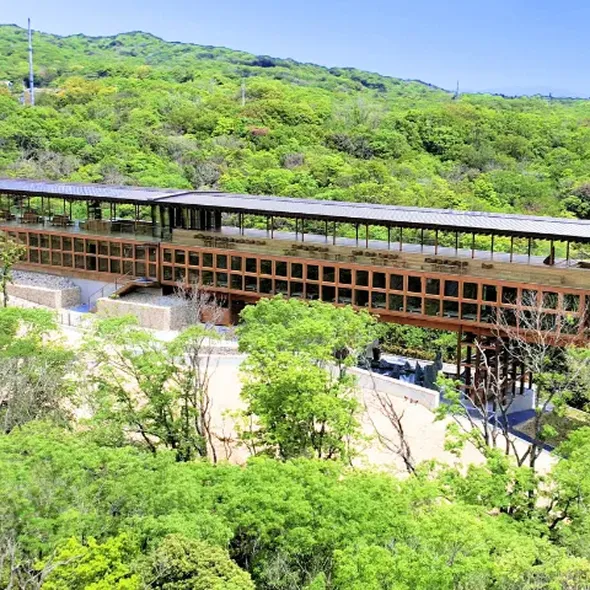
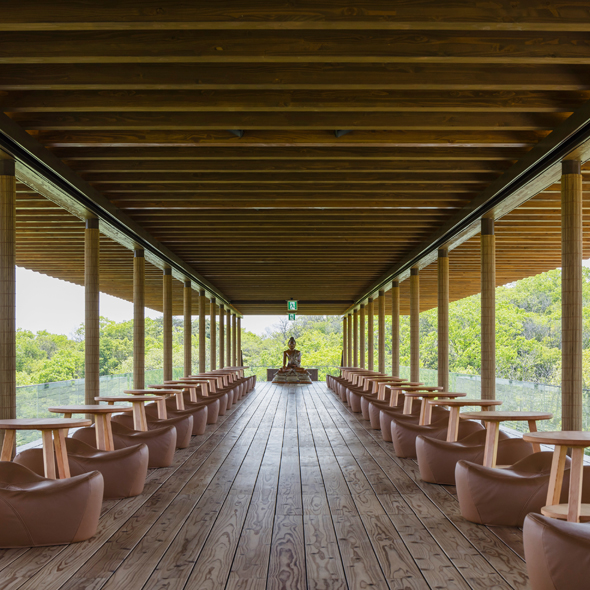
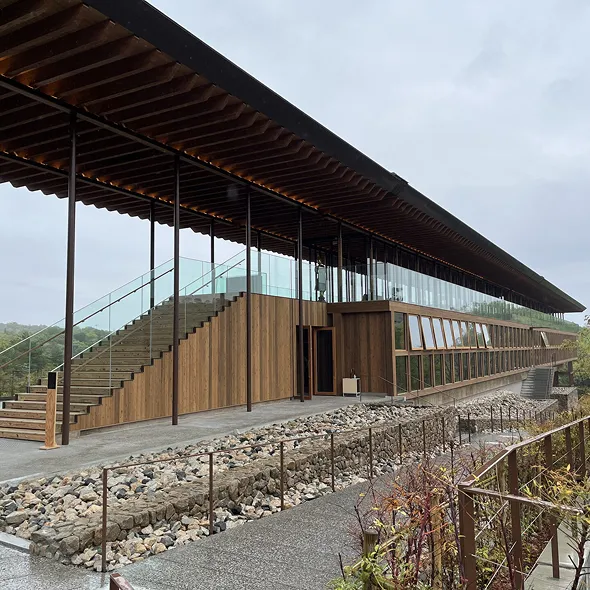
Perched along a forested ridge, the building follows the landscape with a long, elegant timber form. Its 100-meter wooden deck built with Japanese cedar seems to float above the trees, opening wide views of the mountains and sky. Instead of competing with nature, the architecture lets the scenery take center stage.
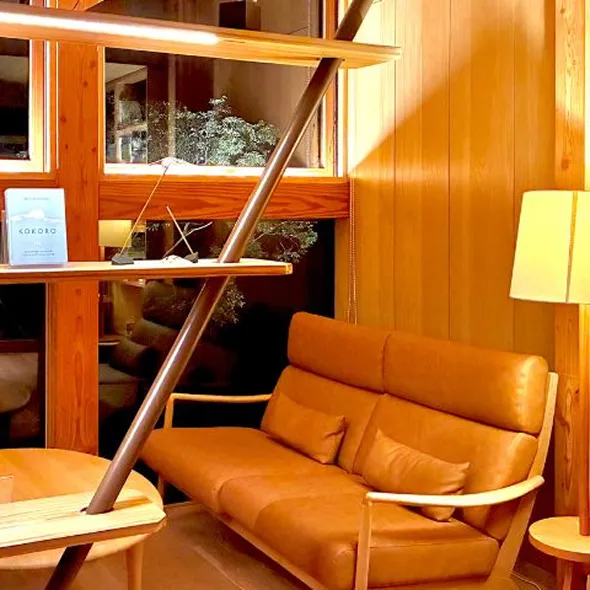
Designed as a place for Zen meditation, yoga, wellness, and mindful living, the retreat encourages visitors to disconnect from daily distractions and reconnect with themselves. The building’s minimalist wooden interior avoids unnecessary decoration, allowing natural materials, changing daylight, and panoramic scenery to shape the atmosphere instead.
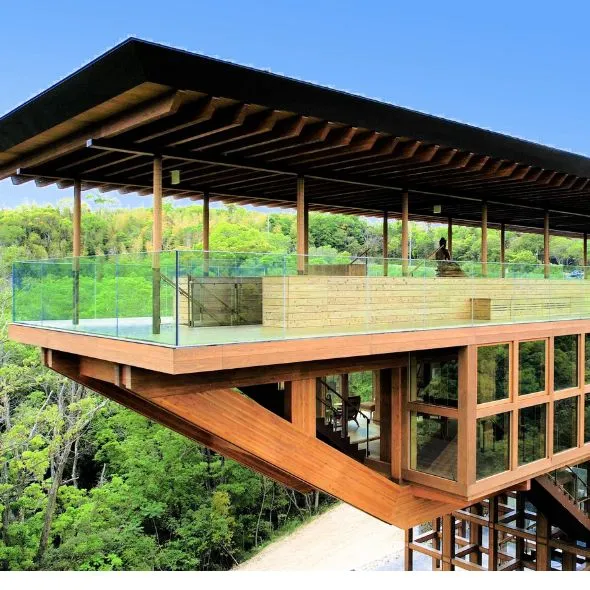
Every element has been carefully considered—from the proportions of the meditation hall to the way the structure opens toward the landscape. Walking barefoot along the fragrant cedar deck, listening to birdsong, or watching mist drift across the hills becomes part of the architectural experience itself.
Rather than asking visitors to admire the building, Zenbo Seinei invites them to become fully present within it.
Looking for a truly immersive experience?
At Zenbo Seinei, architecture is only the beginning. Join guided meditation, yoga sessions, and seasonal wellness programs while enjoying panoramic views across Awaji Island’s peaceful forests.
Farmer’s Restaurant Haru San San: Where Architecture Meets Agriculture
Great architecture does not only shape how we move. It also shapes how we gather.
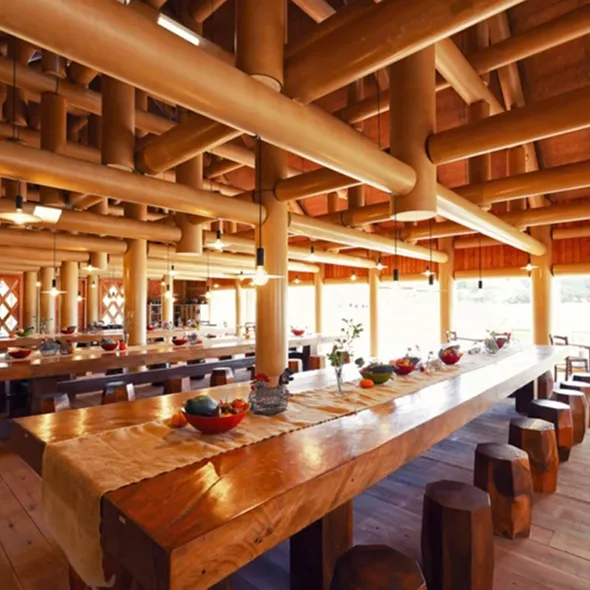
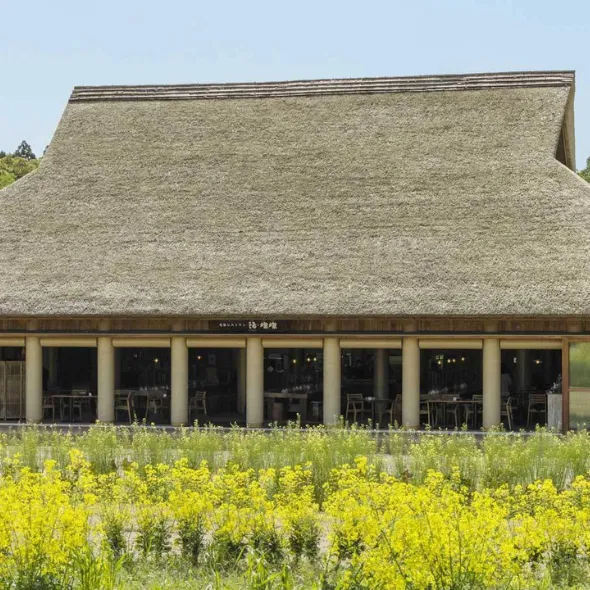
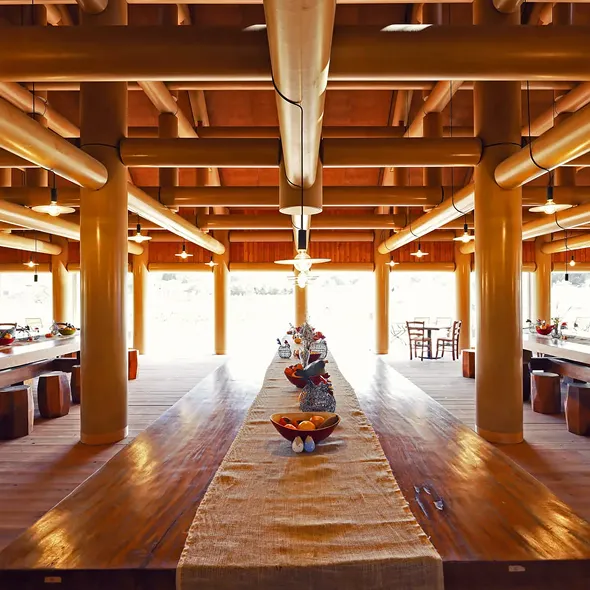
At Farmer’s Restaurant Haru San San, Shigeru Ban turns an everyday meal into a memorable experience. Set among fields and gardens, the restaurant stands out for its thatched roof and paper tube columns, two elements that reflect Ban’s signature approach to design. The building takes inspiration from traditional Japanese farmhouses, while its light, open structure gives it a contemporary feel.
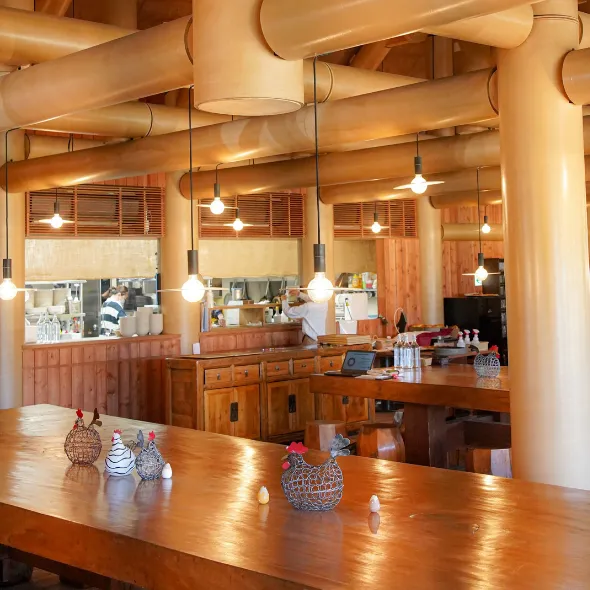
Inside, natural light and simple materials create a calm atmosphere that feels closely tied to the surrounding farmland. The menu follows the same philosophy, with seasonal vegetables grown nearby taking center stage. Dining here is not just about food. It is about experiencing how architecture, agriculture, and local life come together.
Farming Resort San San Villa: Living Inside Contemporary Architecture
If Zenbo Seinei shows how architecture can support mindfulness, Farming Resort San San Villa shows how design can shape everyday living.
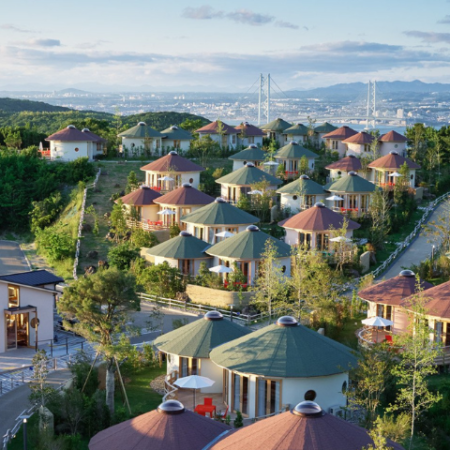
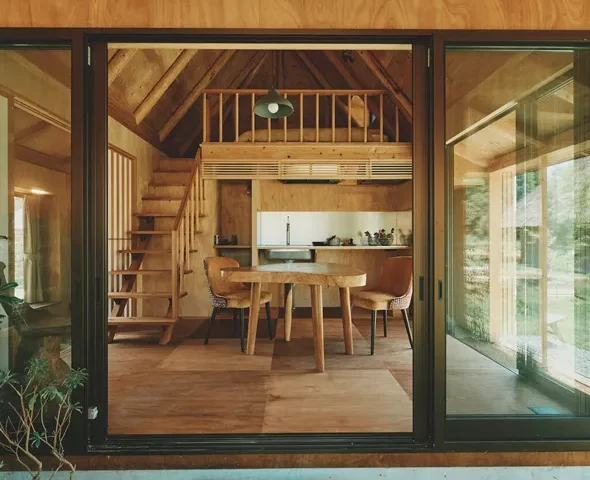
The resort brings together 11 unique buildings, each designed by a different architect and united by a shared idea: living in harmony with nature and agriculture. Every villa offers a different interpretation of this concept, giving guests the chance to experience several architectural styles in one place.
Here, architecture is not something you only admire. It is something you stay inside.
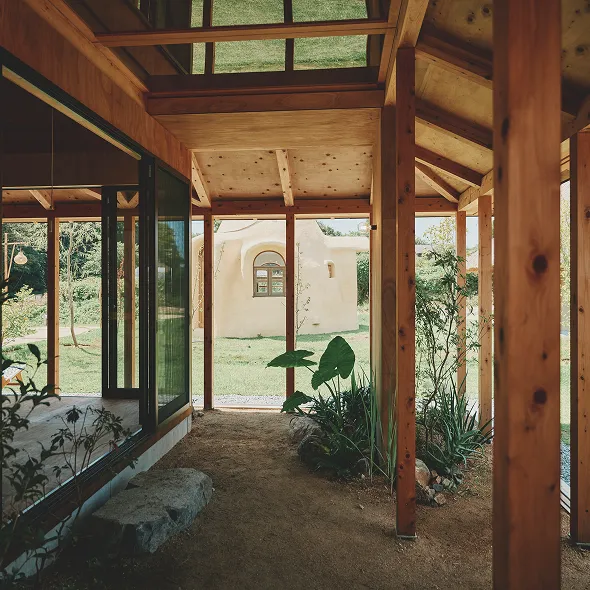
Guests wake up to birdsong, walk through nearby fields, and return to spaces filled with natural materials, daylight, and framed views of the landscape. The experience feels more like becoming part of the island’s rhythm than staying in a hotel.
The project includes work by architects such as Sou Fujimoto who designed the Great Ring at Osaka Expo in 2025, Hiroshi Nakamura, atelier oï, and Ryuichi Ashizawa. Together, these buildings create one of the most interesting places to experience Awaji Island architecture, where design, farming, and nature all shape the stay.
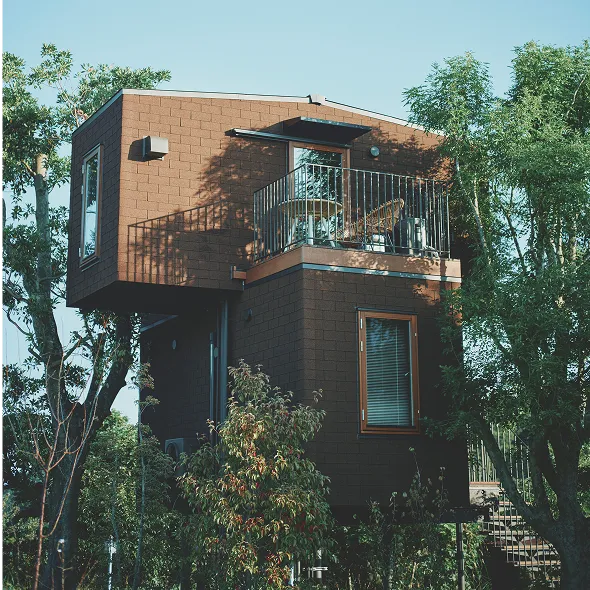
What makes San San Villa especially memorable is that the experience continues beyond the buildings themselves. Farming activities, local food, and close contact with nature extend the design philosophy into daily life.
Closing
Awaji Island shows that great architecture does more than impress. It creates moments of reflection, comfort, and connection. From Tadao Ando’s quiet concrete spaces to Shigeru Ban’s warm, sustainable designs, the island offers two different but equally powerful ways to experience architecture.
Whether you are drawn to Tadao Ando buildings or to the welcoming spaces shaped by Shigeru Ban, Sou Fujimoto and other architects, Awaji Island is a place where design and nature feel inseparable.
It is not just an architectural destination.
It is an experience.
Plan Your Architectural Escape
Ready to discover one of Japan’s most remarkable architectural destinations?
Explore our carefully curated 2-Day Architecture Plan, featuring iconic works by Tadao Ando, Shigeru Ban, and other architects, unforgettable dining experiences, wellness retreats, and unique accommodations—all thoughtfully arranged into an easy-to-follow itinerary.
Your next great architectural journey begins on Awaji Island.